
EASTLEIGH RETINAL LASER TREATMENT
Retinal Laser Treatment in Eastleigh
If you live in Eastleigh, Hampshire, and have been referred for retinal laser treatment, this page is for you. It explains what laser photocoagulation does, which retinal problems it treats, and what happens on the day. Your nearest hospital is Nuffield Health Wessex Hospital, Winchester Road, Chandler's Ford, a short drive from Eastleigh, where consultant ophthalmologist Dr Bhaskar Gupta provides assessment and laser treatment. Mrs Heidi Cheung, his secretary, arranges your care.
Book an Eastleigh Appointment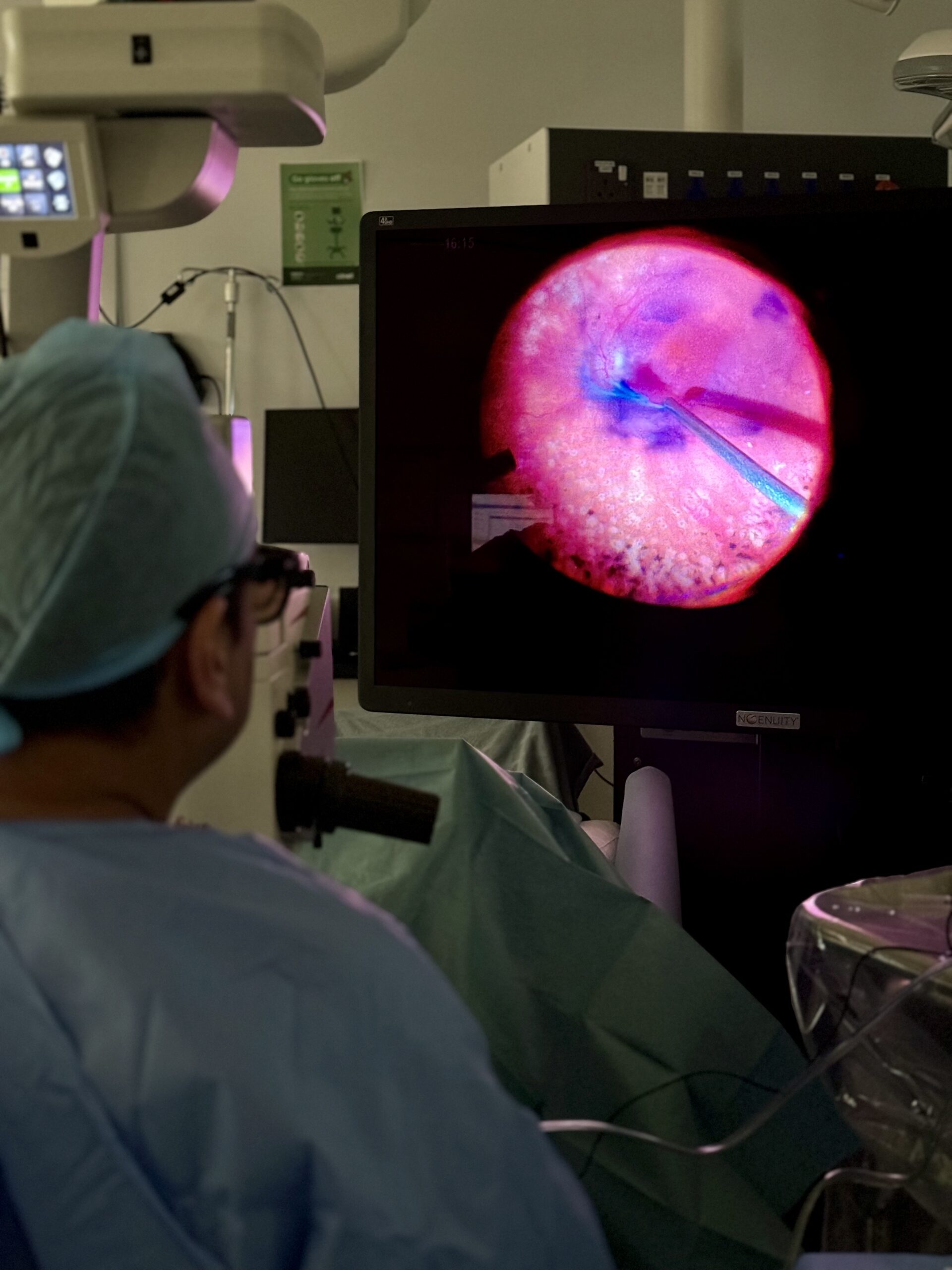
The hospital for Eastleigh patients
Eastleigh patients are seen at Nuffield Health Wessex Hospital in Chandler's Ford, on Winchester Road. It is the hospital closest to Eastleigh for this treatment, so your assessment and laser take place at one hospital, with one team looking after you from first visit to follow-up.
Nuffield Health Wessex Hospital
Winchester Road, Chandler's Ford, Eastleigh, Hampshire, SO53 2DW
Appointments: +44 7591 103665
Secretary: Mrs Heidi Cheung
When you contact the hospital, Mrs Cheung can confirm your appointment and answer questions about your visit, so you know what to expect before you travel from Eastleigh.
How laser photocoagulation protects your sight
The retina is the light-sensitive layer at the back of the eye, turning light into signals the brain reads as sight. When part of it is starved of oxygen, leaking fluid or torn, sight is at risk. Laser photocoagulation uses a focused beam of light, aimed through a slit lamp, to treat the affected retina without an incision.
The beam makes very small, precise burns. Each one forms a tiny chorioretinal scar that seals tissue in place or closes leaking vessels, and the scar strengthens over the following weeks. Treatment is usually an outpatient session, with topical anaesthetic drops to numb the surface of the eye, and sessions often last 10 to 20 minutes. Laser protects the sight you still have; it does not restore sight already lost.
Which retinal conditions are treated with laser here
Laser is not one treatment for every retina. The pattern of burns and the number of sessions depend on the diagnosis. These are the conditions Dr Gupta most often treats with laser for Eastleigh patients.
Diabetic retinopathy
Diabetes can damage the small blood vessels of the retina over time, often with no symptoms at first, so it is often found at diabetic eye screening. When the retina is starved of oxygen, it can grow fragile new vessels, called neovascularisation, that leak or bleed. Panretinal photocoagulation (PRP) places many small laser burns across the outer, peripheral retina. That treated area needs less oxygen, which can slow the growth of new vessels and help protect central vision. PRP is often spread over more than one session, and the NHS gives a clear account of it on its diabetic retinopathy page.
Diabetic macular oedema
Diabetic macular oedema is swelling at the macula, the small central part of the retina used for reading and recognising faces. Fluid leaks from damaged vessels, so central vision becomes blurred or distorted. Focal or grid laser treats the leaking spots with small burns. It may be used on its own or alongside intravitreal injections, and Dr Gupta will explain which combination fits your scans.
A retinal tear or hole
The vitreous, the clear gel that fills the eye, can pull on the retina as it changes with age, tearing it or leaving a hole. Many people first notice flashes of light, new floaters, or a shadow at the edge of their vision. Laser retinopexy places a ring of small burns around the tear or hole, forming a chorioretinal scar that seals the retina to the wall of the eye. Sealing it early lowers the risk of fluid passing through the break and causing a rhegmatogenous retinal detachment.
Retinal vein occlusion
In a retinal vein occlusion, a vein draining blood from the retina becomes blocked. Pressure rises, fluid and blood leak, and macular oedema can follow, blurring central vision. Laser can treat leaking areas and abnormal vessels that form after the blockage. Because swelling can return, follow-up scans and review at the same hospital are part of the plan.
What happens on your Eastleigh appointment day
- Assessment: Dr Gupta takes a history, checks your vision and examines the retina with dilating drops and a slit lamp. Scans and images map the retina so the laser can be aimed precisely.
- Laser session: Topical anaesthetic drops numb the surface of the eye, and a special contact lens is held gently on the eye to focus the beam. You will see bright flashes and may feel mild pressure. Most sessions last 10 to 20 minutes, and you can go home the same day.
- Follow-up at the same hospital: A later review checks how the chorioretinal scar has formed and whether another session is needed. If new flashes, floaters or a shadow appear, contact the hospital team promptly.
Laser choices, explained in plain English
- Laser retinopexy: for a retinal tear or hole, a ring of burns to seal it to the wall of the eye.
- Panretinal photocoagulation (PRP): for proliferative diabetic retinopathy, many burns across the peripheral retina, often in stages.
- Focal or grid laser: for diabetic macular oedema, small burns to leaking vessels near the macula.
Dr Gupta chooses the approach after examining your retina. Some people need laser plus injections, and if a detachment has already happened, surgery such as a vitrectomy may be needed instead. That decision is made with you, not for you.
Recovery after laser
After laser, the eye may feel mildly sore or gritty, and vision is often blurred for some hours because of the dilating drops. Rest for the rest of the day and use any drops only if Dr Gupta advises them. Do not drive until your vision has settled. Follow-up takes place at Nuffield Health Wessex Hospital, where Dr Gupta checks the retina and the scar. Some people need a second session, and that is planned at review rather than assumed in advance.
When laser may not be the answer
Every laser session carries some risk. Discomfort and temporary blurring are common. Extensive PRP can reduce some peripheral vision, and there is a small chance of damage to central vision. Laser cannot cure diabetes or restore sight already lost, and it does not suit every retina. Alternatives, such as watchful waiting with regular review, injections, or surgery, are discussed at your consultation. If laser is not suitable for you, Dr Gupta will say so and explain the other options. The retinal laser treatment parent page gives the same picture in full.
Travelling from Eastleigh
From Eastleigh, Nuffield Health Wessex Hospital is reached by car via the M3 or the M27 corridors. Ask Mrs Heidi Cheung when you book, on +44 7591 103665, if you are unsure about the route. Because dilating drops blur vision for some hours, bring someone who can drive you home.
Paying for care: insurance, self-pay and the NHS
No prices are listed on this page. If you use private medical insurance, contact your insurer before your visit and check whether Dr Gupta and Nuffield Health Wessex Hospital are covered, and whether pre-authorisation is needed. Self-pay patients can ask the practice team about fees and payment arrangements. Retinal laser treatment is also available on the NHS, and referral and waiting arrangements vary. The private medical insurance and payment options page explains what to check before you book.
Questions Eastleigh patients ask about retinal laser
Is laser treatment for diabetic retinopathy painful?
Topical anaesthetic drops numb the surface of the eye, so most people feel pressure and see bright flashes rather than sharp pain. The eye may feel sore or gritty afterwards, and that usually settles over a day or so.
Will laser improve my vision?
Laser aims to protect the sight you still have, not to improve it. The chorioretinal scar forms over weeks, and success is judged at follow-up, not on the day of treatment.
How many PRP sessions will I need?
PRP for diabetic retinopathy is often spread over more than one session, because many burns are needed across the peripheral retina. Dr Gupta will tell you after examining your retina how many sessions your case is likely to need.
Can I go back to work the next day?
Many people can, if their work does not depend on sharp vision that day. Your vision is often blurred for some hours after dilating drops, so plan a rest day and do not drive until your vision has settled.
I have diabetes. Does needing laser mean my diabetes is worse?
Not necessarily. Laser is used when the retina shows changes that need treatment, even when blood sugar has been well managed. Keeping blood sugar and blood pressure as well controlled as you can helps slow further damage.
What if I get new floaters after laser in Eastleigh?
Contact the hospital team promptly, especially if there is a dark curtain or shadow across your vision or a sudden loss of sight. These symptoms need urgent assessment.
Why Eastleigh patients choose Dr Gupta
Dr Bhaskar Gupta (MBBS, MS, FRCOphth, MD Research) is a consultant ophthalmic surgeon who has personally completed over 20,000 cataract operations and over 2,000 vitrectomies. He trained as a registrar at St Thomas' Hospital and King's College Hospital, and has written over 60 publications. Your care is consultant-led, so the surgeon who assesses your retina is the surgeon who treats it. Read more about his background on the surgical experience page.
Book your Eastleigh appointment
How to book
To book retinal laser treatment at Nuffield Health Wessex Hospital, use the booking form and choose Nuffield Health Wessex Hospital, or call Mrs Heidi Cheung on +44 7591 103665.
Book an AppointmentLearn more before you book
Read the retinal laser treatment parent page, check the private medical insurance, referrals and self-pay options, or ask Mrs Cheung about your visit to the hospital.